
Identify the equipment before deciding what to turn off
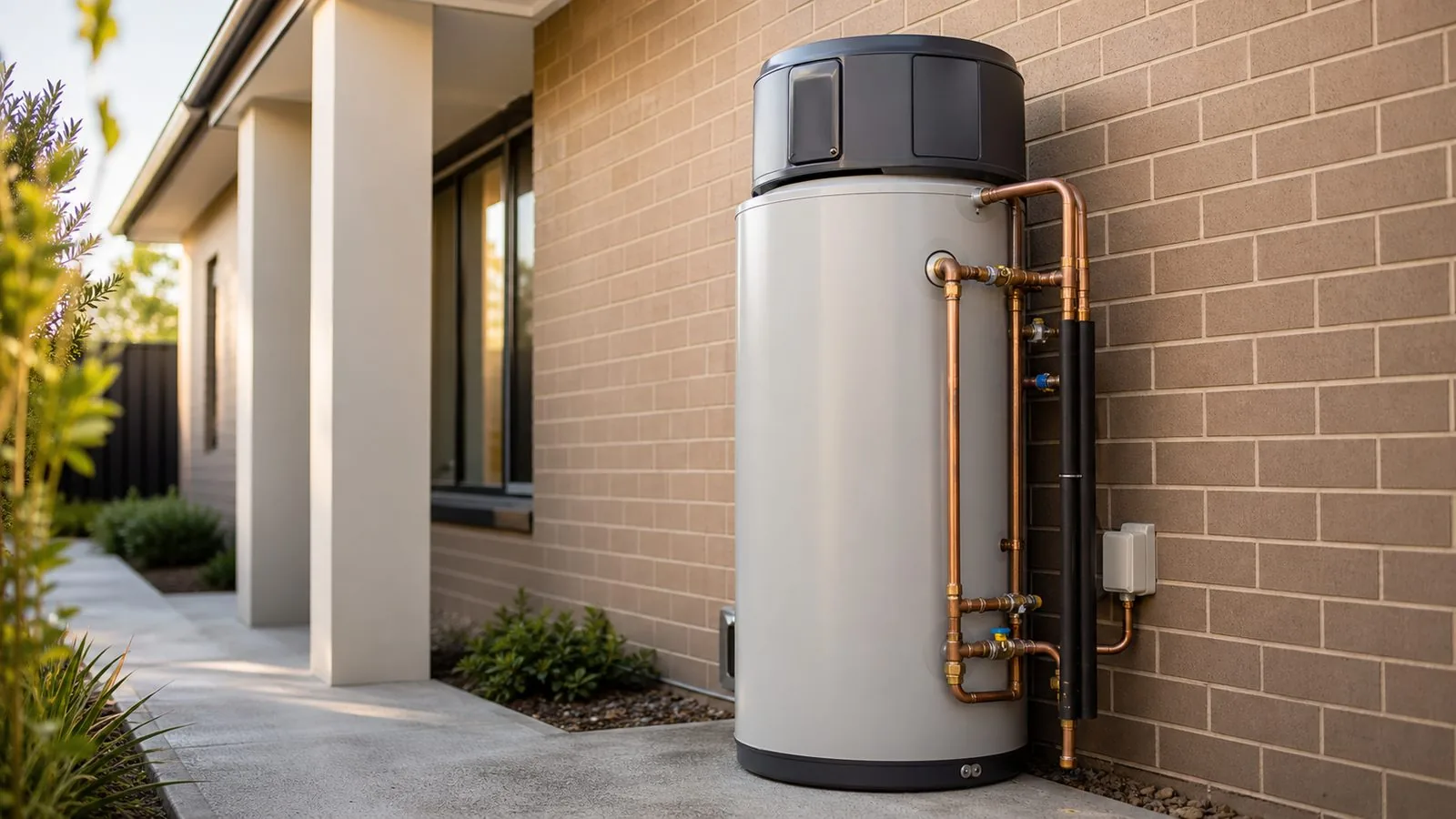
Start with the exact water heater model, not simply whether the house has gas or electricity. A home may have solar collectors with a separate booster, a heat pump with an electric element, or a continuous-flow appliance that also needs electrical power for controls. Photograph the accessible model label and locate the corresponding owner instructions before choosing an absence setting.
Make sure the manual belongs to the installed version. Product families can include different controllers and operating modes. A video showing a similar display is not enough evidence that the same button sequence applies. If the label is hard to reach safely, use the installation paperwork or ask the installer to identify the model. Do not remove a cover or climb into an unsafe position merely to obtain a serial number.
The practical objective is to leave the system in an appropriate state and return it to normal safely. Saving energy is part of that decision, but so are required protective functions and the condition of the water supply. A shutdown procedure copied from a neighbour can overlook those differences. Keep the discussion tied to your own equipment and how long the property will be unoccupied.
Distinguish holiday mode from cutting power
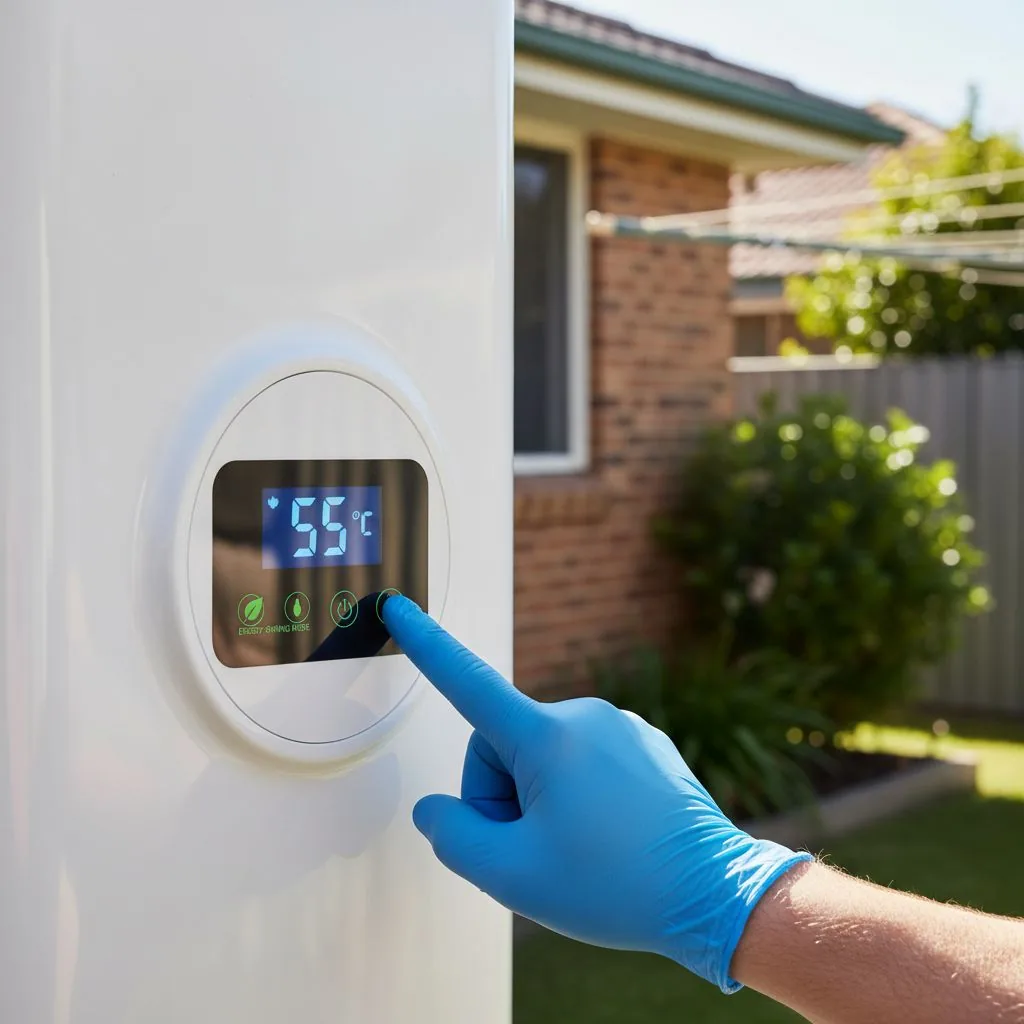
Some water heaters offer an absence or vacation function through the controller. Its behaviour is model-specific: it may change heating activity, use dates or require a particular return action. Do not assume the word “holiday” means the appliance is electrically isolated, or that it guarantees hot water at a chosen return time. Read what the setting actually controls.
Switching off at a display can also differ from switching off electrical supply. Equipment may rely on power for controls or protective functions even when ordinary heating is reduced. Ask the manufacturer or installer to explain that distinction if the instructions are unclear. This is particularly important when a household intends to turn off several circuits before leaving and may unintentionally disconnect the hot water system.
Record the current normal mode and any timer settings before making a permitted change. A photograph of the display and a short note can prevent confusion later. Include whether the clock or schedule needs checking after an interruption. If several people manage the home, agree who will make the change so one person does not select vacation mode while another independently removes power.
Match the plan to the absence and the property
A brief trip, a longer holiday and a property left vacant through a season are different situations. The owner's manual may distinguish between them, and the household's water-supply arrangements may also change. Rather than choosing an arbitrary number of days from a general guide, use the model's own instructions and discuss any longer or unusual vacancy with the relevant professional.
Think about what will happen at the property while you are away. Will someone stay overnight, use the laundry or water the garden? Will building work involve the water supply? A setting chosen on the assumption of no occupancy can surprise a house sitter who expects a shower. Tell them what has been changed and whom to contact, without asking them to improvise technical adjustments.
For a South East Melbourne home, consider the actual equipment location and the season of absence. An outdoor unit exposed to cold conditions has different protection considerations from an indoor arrangement. Do not disable a function simply because the immediate forecast looks mild. Follow the model instructions for required services, and obtain advice where those requirements conflict with your intended whole-house shutdown plan.
Coordinate water isolation with the heater procedure
Some homeowners prefer to isolate the household water supply while away to limit the consequences of a leak. That decision needs to be coordinated with the hot water system's instructions and any other equipment using water. It is not simply a matter of turning unrelated switches in any order. Ask what the correct absence procedure is for the complete installation.
Never assume a tank remains full if plumbing work, draining or an unexplained loss of water has occurred. Before a system is energised again, its condition must be known and the appropriate restart process followed. Heating equipment that is empty or incorrectly filled can be damaged or unsafe. A homeowner who is unsure should stop and obtain help rather than testing whether the unit will recover.
Do not operate relief valves or drain a tank as a general holiday routine unless the manufacturer's procedure specifically calls for an owner action and you can follow it safely. Hot discharge water can cause injury, and unfamiliar components are easy to confuse. If professional draining or recommissioning is required, arrange it as a distinct task with clear instructions for the return to service.
If a leak alarm or remote monitoring system is installed, check what it can actually detect and who will respond to an alert. An alert is only useful if someone can access the property and knows which professional to contact. Do not ask a neighbour to restore power or open unfamiliar valves simply because an app reports that the heater is offline. Give the helper a narrow role: observe safely, report visible conditions and contact the agreed person. Keep equipment access clear before leaving so a necessary inspection does not depend on moving heavy stored items.
Prepare for the first day home
Plan when hot water will actually be needed after the trip. Returning late with children who need baths is different from returning in the morning with time to inspect and restore normal operation. A storage system may need a recovery period after an absence setting, while other systems have different restart requirements. Check the model instructions instead of promising the household immediate hot showers.
If the controller supports an approved return-date function, understand how the date, time and heating behaviour work. Confirm the settings before departure and note what happens if power is interrupted. Do not rely on a remote app as the only way to restore service, particularly if connectivity or access to the account could change while travelling.
Have the manual and normal settings available offline. On return, first look for visible changes from a safe position: unexpected water, damaged pipe insulation, debris around the equipment or a displayed error. If something looks wrong, do not proceed automatically through a memorised restart sequence. Report the observation and follow the manufacturer's fault guidance or obtain an assessment before normal use.
Hypothetical example: a holiday with a house sitter
A Berwick household plans to travel and wants to reduce unnecessary heating. Their heat pump has a vacation setting, but a relative will stay for part of the trip. One family member intends to use the vacation menu while another plans to switch off the hot water circuit. Without a shared plan, the relative could arrive to unfamiliar controls and no useful instructions.
The household identifies the exact manual and checks what vacation mode does. They confirm the relative's dates and decide on the appropriate documented operating arrangement for each period. They write down the normal mode, any permitted absence setting and the instructions for returning to normal. If the manual requires power for protective functions, that requirement is included in the household shutdown note.
The relative receives a simple explanation of what to expect and a contact for help. They are not asked to remove covers, change safety settings or guess whether an error is harmless. On the family's return, they check the actual state rather than assuming every planned change occurred. This avoids the common problem of several well-intentioned people leaving the equipment in an unknown combination of modes.
Avoid the apparent shortcuts
Lowering the stored-water temperature is not a substitute for a documented absence mode. Storage and protective controls are part of the system's intended operation, and an arbitrary lower setting may interfere with that design. Use the owner's permitted procedure. If energy use during absence seems excessive, ask how the model manages it and whether its settings or installation need review.
Another shortcut is applying instructions from an overseas model with a similar name. Controllers, protections and plumbing arrangements can differ. Use the Australian documentation for the installed product and seek clarification if the manual covers several variants. A specific question such as “does this model require power while vacation mode is active?” is easier to answer than a broad request for the cheapest way to leave everything off.
Avoid repeated resets after returning to find an error. Record the code and the changes made before departure, including any electrical or plumbing work during the vacancy. If an owner restart is allowed, follow the exact procedure once and observe the result. A returning fault needs investigation. Clearing the display several times can remove useful information without solving the underlying problem.
Treat extended non-use as a separate return task
A long vacancy can require more than restoring the timer. Follow the water heater's specific instructions for extended non-use and any necessary recommissioning. Those instructions can include precautions for conditions that are not visible from the outside. Do not invent a universal flushing routine or assume that turning on a shower proves the complete installation is ready for normal occupation.
Keep a record of who attended the property and whether water was isolated, pipework changed or equipment serviced. If a contractor worked while you were away, obtain confirmation of what was left connected and what remains unfinished. An appliance label saying “off” does not explain whether it was merely paused, drained for work or awaiting a safety check.
Once normal operation is restored according to the instructions, check ordinary use and confirm the agreed mode and clock are correct. Watch for recurring errors, leaks or a changed supply pattern and report them with the absence history. Store the final holiday and return note with the equipment manual. The next trip can then begin with verified instructions for your own installation instead of another round of guesswork.